
Vajrasattva Meaning: It Is Not Just a Deity.
Vajrasattva is the Buddhist embodiment of purification. In Tibetan Buddhism he appears as a white, radiant figure holding a vajra (dorje) at the heart and a bell at the hip, invoked through the hundred-syllable mantra to cleanse negative karma. He is not merely another deity to worship from a distance — he is a practice, a method for meeting the parts of yourself you would rather not look at.
For a site that sells mala beads, vajra pendants, and Tibetan jewelry, the name comes up constantly. Buyers ask whether a “Vajrasattva mala” is just decoration or something with weight behind it. The honest answer is that the figure carries one of the most repeated practices in the entire Vajrayana system, and understanding him changes how you wear the symbol.
Why Is Vajrasattva Always Shown in White?
Color is the first thing anyone notices, and it is not arbitrary. Vajrasattva is depicted white because white stands for unstained purity — the natural clarity of mind before it gets covered by regret, habit, and the things we did not mean to do. The Rubin Museum of Himalayan Art describes a 14th-century Nepalese gilt-copper Vajrasattva (object C2005.16.10) as both a highly accomplished bodhisattva and a primordial buddha “often invoked to purify the errors made during ritual and other religious practices.” The Metropolitan Museum of Art holds a standing Vajrasattva from western Tibet, dated to about the 11th century (object 1975.441), confirming that the white, vajra-and-bell form has been stable iconography for a thousand years.
White is also a promise. In the visualization used by practitioners, the figure sits above the crown of the head on a moon disc and a lotus, and white light or nectar is imagined streaming down to wash the body clean. The color is the instruction: nothing here is being punished, only clarified.
What Do the Vajra and the Bell Actually Mean?
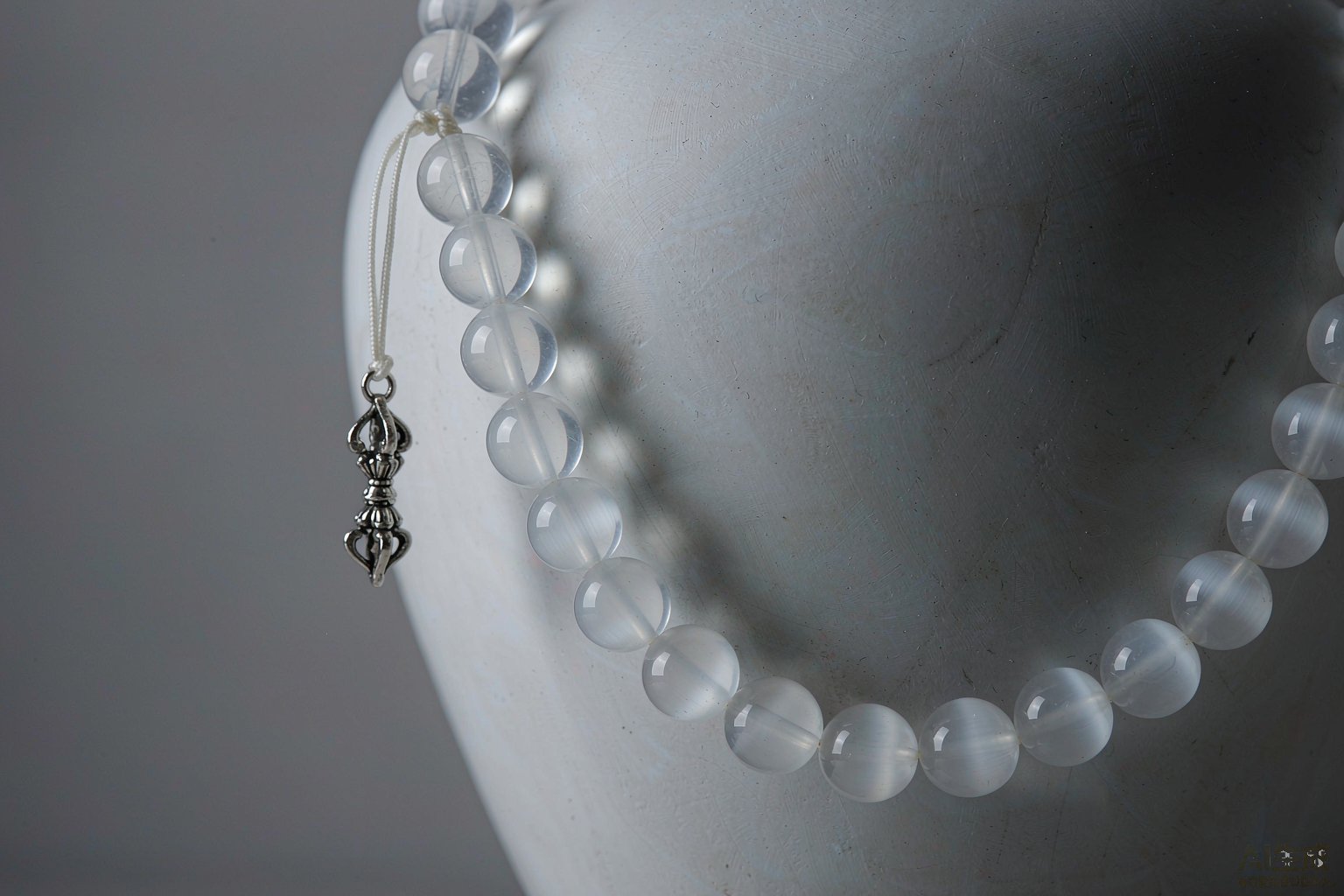
This is the part most jewelry descriptions get wrong. The vajra (dorje) in his right hand is not a weapon. It is the symbol of indestructible reality — the unbreakable truth of an awake mind that cannot be shattered by fear, contradiction, or time. The bell (ghanta) in his left hand sounds the wisdom of emptiness: the insight that nothing we cling to has a fixed, separate self. Held together at the heart, they represent the union of compassion (skillful means, the vajra) and wisdom (the bell). You cannot have one without the other and still call it Buddhism.
If you wear a vajra pendant, that is what you are carrying: not a charm against bad luck, but a reminder that steady compassion and clear seeing belong in the same hand. Our guide to the meaning of the vajra goes deeper on why “weapon” is the wrong translation.
The hundred-syllable mantra is the engine of the whole practice, and it is why Vajrasattva matters far beyond art history. In the Ngöndro (preliminary practices) of Tibetan Vajrayana, a practitioner repeats the mantra — often with a commitment of one hundred thousand recitations — not to earn merit like points, but to actively dissolve the karmic imprints of past actions through what teachers call the Four Powers: reliance on the refuge object, sincere regret, the remedial action of the mantra itself, and a firm resolve not to repeat the harm. The Tibetan Buddhist Encyclopedia’s purification entry lays out the classic visualization in detail: white light descending from the figure’s heart, filling every cell, washing negativity out like dirty water leaving a glass. The point is not guilt. The point is that the mind’s basic purity was never actually damaged — only obscured, and obscuration can be cleared.
Is Vajrasattva the Same as Vajrapani or Chenrezig?
No, and the confusion is understandable because they share the vajra family and a Himalayan visual language. Vajrapani is the wrathful protector who wields the vajra as power; Chenrezig (Avalokiteshvara) is the bodhisattva of compassion; Medicine Buddha heals. Vajrasattva’s distinct job is purification, and he is the one called on specifically to repair broken commitments and cleanse the obscured mind. In many lineages he is treated as a primordial buddha rather than a developed bodhisattva — a subtle but important rank that separates him from the others.
| Figure | Role | Color | Held symbol | Primary practice |
|---|---|---|---|---|
| Vajrasattva | Purification | White | Vajra + bell | Hundred-syllable mantra |
| Vajrapani | Protector / power | Blue | Vajra | Wrathful refuge |
| Chenrezig | Compassion | White | Lotus | Om mani padme hum |
| Medicine Buddha | Healing | Blue / gold | Medicine bowl | Healing mantra |
That table is a useful map when shopping. A pendant that pairs the vajra with a bell is probably pointing to Vajrasattva; a pendant that carries only a vajra is more likely Vajrapani or just a general vajra symbol. The category that collects our dzi and ritual-themed pieces is Dzi Beads and Tibetan protective jewelry, where the symbols are chosen to work together rather than contradict.
How Do Practitioners Actually Use the Practice?
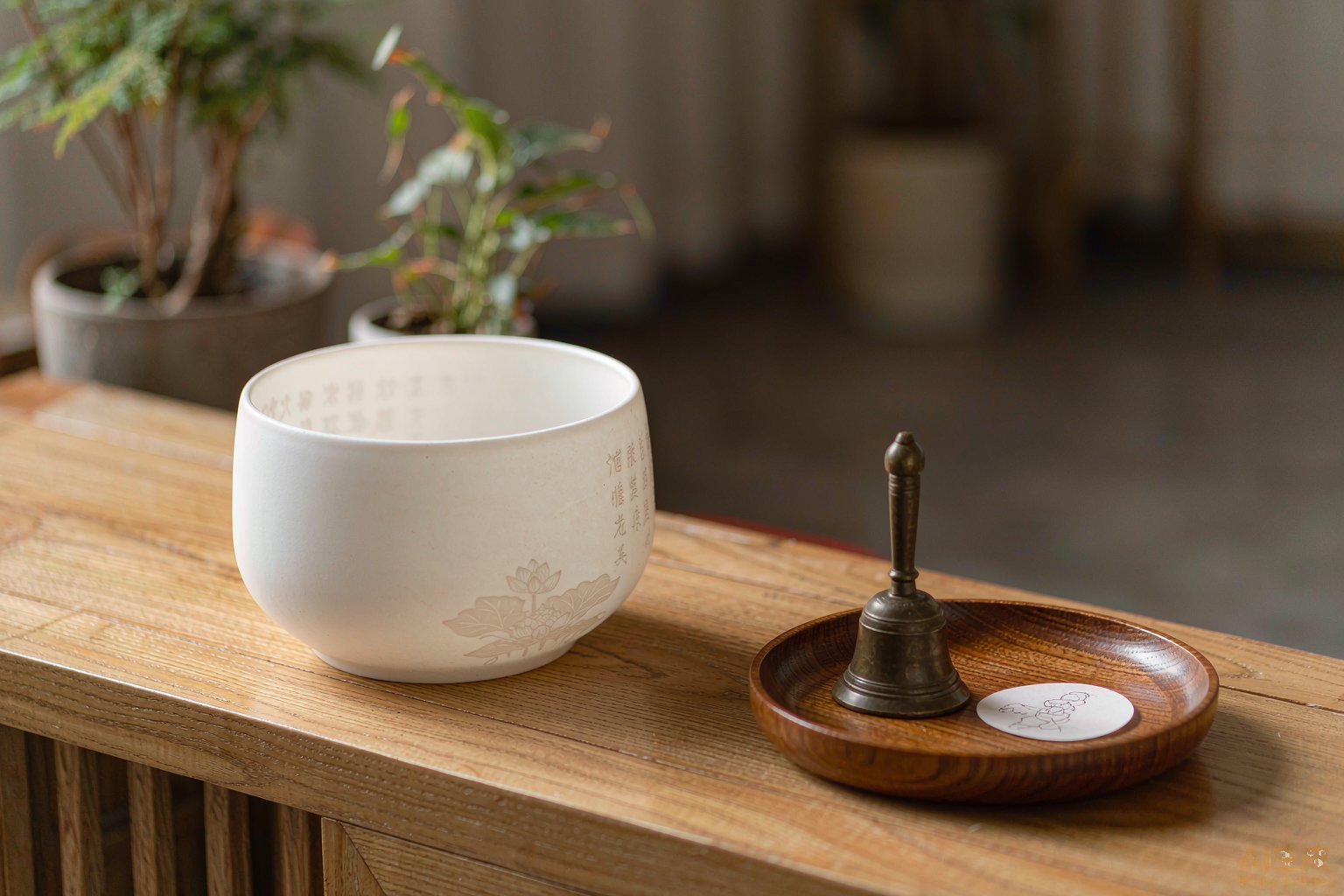
The practice is structured, not mystical fog. You visualize the figure above the head, take refuge, generate the wish to awaken for the sake of all beings, then recite the mantra while imagining light and nectar descending. The four powers give it a shape: you acknowledge what happened (regret), you rely on something larger (refuge), you apply the remedy (the mantra), and you resolve to do better (determination). None of it requires a statue on your altar — a mala in your hand does the counting, which is exactly why Vajrasattva-themed beads are common.
Can You Wear Vajrasattva Symbolism as Jewelry?
Yes, and it is one of the more defensible things to wear. A white stone, a small vajra, or a bell motif is a portable prompt for the same four powers: a reminder to look at your actions honestly, to repair what you can, and to start clean. It is not a claim of religious rank. It is a personal commitment worn where you can see it. If you are building a practice-adjacent collection, our pillar guide to the spiritual significance of dzi beads explains how Tibetan protective symbols are chosen and combined, and the dzi beads category gathers pieces that pair naturally with a purification theme.
Frequently Asked Questions
What does “Vajrasattva” mean in English? The name is usually translated as “Diamond Being” or “Vajra Being” — vajra for the indestructible reality of an awake mind, sattva for being or essence.
Is the hundred-syllable mantra the same as Om mani padme hum? No. The hundred-syllable mantra is specific to Vajrasattva purification; Om mani padme hum belongs to Chenrezig and is a general compassion mantra. Our guide to Chenrezig meaning covers that distinction.
Do I need empowerment to wear Vajrasattva jewelry? Wearing a symbol is not the same as receiving a tantric empowerment. Most teachers ask for empowerment only before doing the full visualized practice, not before wearing beads.
Sources
- The Metropolitan Museum of Art — Standing Vajrasattva (Western Tibet, ca. 11th century): https://metmuseum.org/art/collection/search/39177
- Rubin Museum of Himalayan Art — Vajrasattva (Nepal, 14th century, C2005.16.10): https://rubinmuseum.org/collection/c2005-16-10
- Tibetan Buddhist Encyclopedia — Vajrasattva Purification: https://www.tibetanbuddhistencyclopedia.com/en/wiki/Vajrasattva_Purification
- Wikipedia — Vajrasattva: https://en.wikipedia.org/wiki/Vajrasattva
Published: 2026-10-17 · Last updated: 2026-10-17 · By Daniel Van